Starting a small herb garden indoors is a wonderful way to enjoy fresh flavors year-round, even without a backyard. Whether you want to enhance your cooking or add greenery to your living space, cultivating herbs inside is a simple and rewarding project. This guide will walk you through the essentials, from choosing your herbs to caring for them effectively.
Why Grow Herbs Indoors?
Indoor herb gardens offer many benefits:
– Convenience: Fresh herbs are always within reach for cooking.
– Year-Round Growth: Unlike outdoor gardens, indoor plants aren’t limited by seasons.
– Space-Saving: Perfect for apartments or homes without outdoor space.
– Air Quality: Herbs can improve indoor air by filtering pollutants.
– Therapeutic: Gardening can be calming, reducing stress.
Choosing the Right Herbs for Your Indoor Garden
Not all herbs thrive indoors equally well. Here are some beginner-friendly options:
– Basil: Loves warmth and plenty of sunlight.
– Parsley: Tolerates lower light but prefers moderate sun.
– Thyme: Hardy and low-maintenance.
– Chives: Grows quickly and needs moderate light.
– Mint: Easy to grow but can spread quickly; best kept in its own pot.
– Cilantro: Prefers cooler indoor temperatures and bright light.
– Oregano: Needs lots of sunlight and well-drained soil.
When selecting herbs, consider how much light your space receives and how much effort you want to put into care.
Selecting Containers and Soil
Containers
Choose pots with drainage holes to prevent waterlogging. Herbs need good drainage to stay healthy.
– Size: Small to medium pots (4-6 inches) work well for most herbs.
– Material: Terracotta pots are breathable and help with moisture control; plastic pots retain moisture longer.
– Shape: Deep pots accommodate roots better than shallow trays.
Soil
Use a high-quality potting mix rather than garden soil. Potting mix is lighter and drains well, which herbs prefer.
– Look for mixes labeled for indoor plants or herbs.
– Avoid heavy, compacted soils.
Finding the Right Spot for Your Herb Garden
Herbs generally need 6-8 hours of direct sunlight each day. A sunny kitchen windowsill or south-facing window is ideal.
If natural light is limited, consider using grow lights:
– LED grow lights are energy efficient and support healthy growth.
– Position the lights about 6-12 inches above the plants.
– Keep lights on for 10-12 hours daily to mimic natural sunlight.
Planting Your Herbs
You can start herbs from seeds, seedlings, or small plants purchased at nurseries.
From Seed:
– Fill your container with potting mix.
– Plant seeds according to packet instructions (usually a few millimeters deep).
– Mist the soil to keep it moist until germination.
– Seedlings may take 1-3 weeks to sprout.
From Seedlings or Small Plants:
– Gently loosen roots if the plant is root-bound.
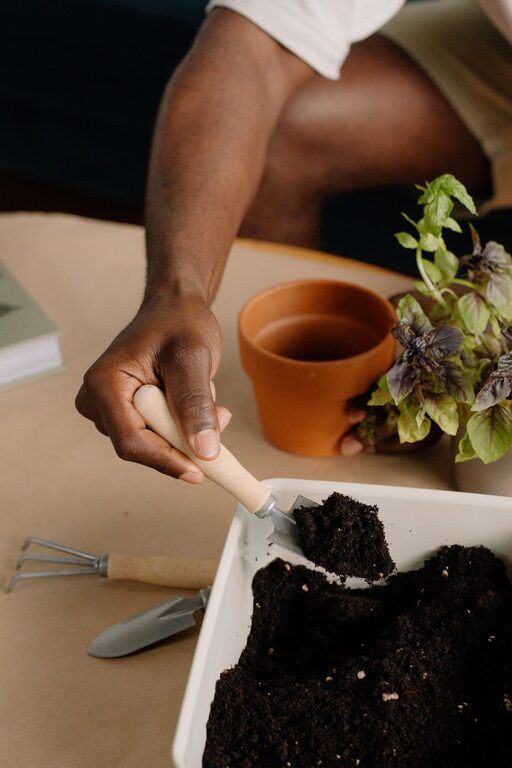
– Place it in the pot and fill with potting soil around the roots.
– Press the soil lightly and water well.
Caring for Your Indoor Herb Garden
Watering
– Water herbs when the top inch of soil feels dry.
– Water thoroughly so excess drains from the bottom.
– Avoid overwatering, which can cause root rot.
Feeding
– Use a balanced, water-soluble fertilizer every 4-6 weeks during the growing season.
– Dilute fertilizer to half the recommended strength to avoid overfeeding.
Pruning and Harvesting
– Regularly pinch or trim herbs to encourage bushy, healthy growth.
– Harvest leaves in the morning when oils are most concentrated.
– Avoid removing more than one-third of the plant at a time.
Monitoring for Issues
– Watch for pests like aphids or spider mites. Wipe leaves with soapy water if needed.
– Remove yellowing or dead leaves promptly.
– Rotate pots weekly to ensure even sunlight exposure.
Tips for Success
– Label your pots to keep track of different herbs.
– Use a spray bottle to increase humidity if your home is dry.
– Group plants close together to create a microenvironment.
– Experiment with combinations like basil and parsley or mint and chives.
Harvesting and Using Your Herbs
Fresh herbs can elevate any dish. Use them to flavor salads, soups, sauces, or teas. To preserve extras, try drying or freezing leaves. With proper care, your indoor herb garden can provide fresh ingredients and a touch of nature indoors all year long.
Starting an indoor herb garden is easier than you think. By choosing the right plants, containers, and location, you’ll enjoy fresh herbs and the satisfaction of growing your own plants indoors. Happy gardening!
About the Author